

A few years ago, the world went crazy for Pokémon GO. Suddenly, people of all ages were out in the streets, exploring cities, parks, and neighborhoods in search of virtual creatures hidden within the real world. Pokémon GO was more than just a game, it was an introduction to the transformative power of location-based augmented reality (AR). This technology not only entertained millions but also revealed a new way to blend digital content with our physical environment, opening up possibilities for businesses, cities, and institutions.
But beyond the hype, what makes location-based AR so powerful? And how are companies helping to shape its future? In this blog, we’ll dive into how location-based AR works, why it’s revolutionizing local discovery, and how our expertise can help businesses leverage this exciting tool to elevate customer experiences.
The Technology Behind the Magic
Location-based AR enables digital interactions tied to specific physical locations. By combining real-time GPS data with augmented content, users can view information, visuals, or interactive experiences that are directly relevant to where they are. This differs from typical AR, which might be accessed anywhere through a QR code or an app without any specific geolocation. Instead, location-based AR connects the physical and virtual worlds, crafting interactive experiences that are meaningful to the location where they unfold.
For example, think of visiting a historical landmark where AR reveals a reenactment of historical events that happened on that spot or entering a store and encountering an interactive display of products only visible through your smartphone. The physical location becomes the anchor for a unique digital experience.
For businesses, this creates an opportunity to engage customers like never before, offering digital interactions at physical locations that build brand awareness and deepen customer connections. At DevCrew, our team of engineers is dedicated to bringing innovative AR experiences to life, using location-based technology to deepen engagement, enhance exploration, and redefine how audiences interact with their surroundings.
How Does AR Pinpoint Your Location So Precisely?
One of the most intriguing aspects of location-based AR is how it works. How does AR know your exact location and what content to display?
The answer lies in a combination of advanced technologies. AR applications typically use GPS (Global Positioning System) data to determine your precise location, allowing them to display digital content anchored to real-world spots. For indoor spaces or locations where GPS signals may not be as strong, technologies like beacons and Wi-Fi triangulation come into play. Beacons, for instance, are small devices placed strategically within a space that emit Bluetooth signals. When your device picks up these signals, it can determine your position within the building or area, allowing AR content to adjust accordingly.
In addition to GPS and beacons, many AR systems also rely on mapping and geofencing. Mapping lets the app recognize the surrounding environment, while geofencing ensures that AR content appears only within specific geographic boundaries. Combining these methods, AR applications can provide a smooth, immersive experience, presenting users with relevant information and interactive content that aligns perfectly with their real-world location.
Why Location-Based AR is Gaining Momentum
Location-based AR is on the rise for several reasons:
Enhanced User Engagement: By connecting users with interactive digital content in real-world locations, it captures attention and drives deeper engagement. Users are more likely to explore content they find directly relevant to where they are, which makes this a powerful tool for increasing brand interaction.
Immersive Brand Experiences: AR provides a unique opportunity for brands to blend the online and offline worlds, delivering memorable experiences that stand out. For instance, Snapchat Geo-Filters allows users to overlay creative, location-based filters over their images when they’re at specific landmarks or events, making interactions with the location memorable and highly shareable.
Personalized and Contextual Interactions: AR experiences are customizable and can be designed to respond to location, time of day, or even user behavior, creating interactions that feel highly personalized and context-aware. Google Lens, for example, enables users to point their camera at an object or location to instantly access relevant information—from product details to historical facts—offering a powerful, context-driven experience wherever they go.
Innovative Applications of Location-Based AR
Location-based AR is finding applications in a variety of fields, each with its unique impact:
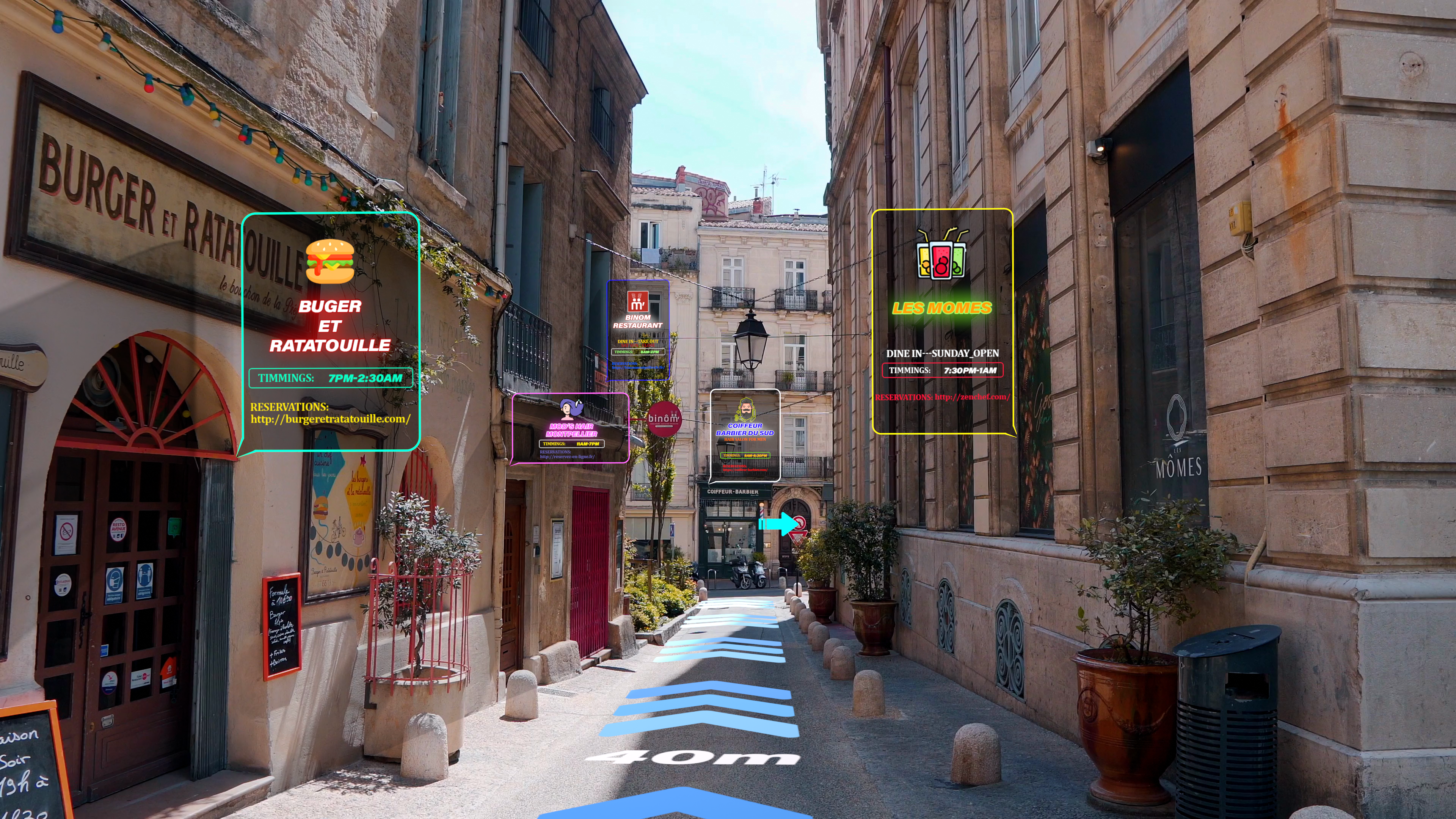
Retail: Retailers use location-based AR to attract foot traffic and offer exclusive in-store deals. Imagine seeing an augmented overlay on your phone as you walk past a store, highlighting a sale on a product you viewed online or showcasing items available inside. These digital displays can even guide users directly to what they’re looking for within the store.
Tourism and Cultural Experiences: Museums, historical sites, and tourist destinations are leveraging AR to make visits more immersive and informative. Visitors can see historical figures brought to life, access in-depth information about exhibits, or follow interactive tours of cities, all through their mobile devices.
Events and Entertainment: Concerts, festivals, and events are starting to use AR to provide exclusive, augmented content for attendees. At a music festival, users might see AR visual effects that enhance the live performance, or they might explore interactive scavenger hunts around the event space.
Education and Training: Educational institutions and companies are integrating AR into real-world settings to offer hands-on learning experiences. In science centers or nature parks, for instance, AR can add digital layers that explain natural phenomena, identify plants or animals, or simulate complex scientific processes.
Today’s Landscape: Location-Based AR Empowered by Cutting-Edge Technologies
In 2024, location-based augmented reality (AR) has achieved remarkable advancements, driven by cutting-edge technologies that have seamlessly integrated AR into everyday experiences:
5G Connectivity: With 5G networks now widely accessible, AR experiences are more immersive, responsive, and realistic. Faster data speeds allow for real-time interactions with digital content, creating a smooth, uninterrupted experience as users explore various locations and environments.
Wearable AR Devices: AR has evolved beyond mobile screens, with wearable devices like AR glasses providing a hands-free experience. Innovations like Snap’s Spectacles have made it easier than ever to integrate digital information seamlessly into our surroundings. Walking through a city or museum, users can see details about nearby attractions, menus at restaurants, or business hours directly in their line of sight.
Augmented Navigation: AR-powered navigation is becoming mainstream, particularly in urban areas and large indoor venues. With AR navigation, users can view digital guides, arrows, or markers in real-time, leading them to specific destinations. This is transforming experiences in retail centers, airports, and even tourist sites, making it easier for people to find their way around.
For businesses looking to innovate, location-based AR offers an exciting frontier. At DevCrew, we’re ready to help you navigate this technology with our team of expert engineers and creative developers. Whether you’re aiming to boost customer engagement, offer unique experiences, or elevate your brand’s reach, we have the tools and knowledge to bring your vision to life.
If you’re interested in leveraging location-based augmented reality (AR) to enhance your business, we would be delighted to collaborate with you to design engaging and impactful experiences. Please don’t hesitate to contact us to discuss how we can bring your vision to life.
